Tropical Storm Mekkhala 2026
Last Modified:
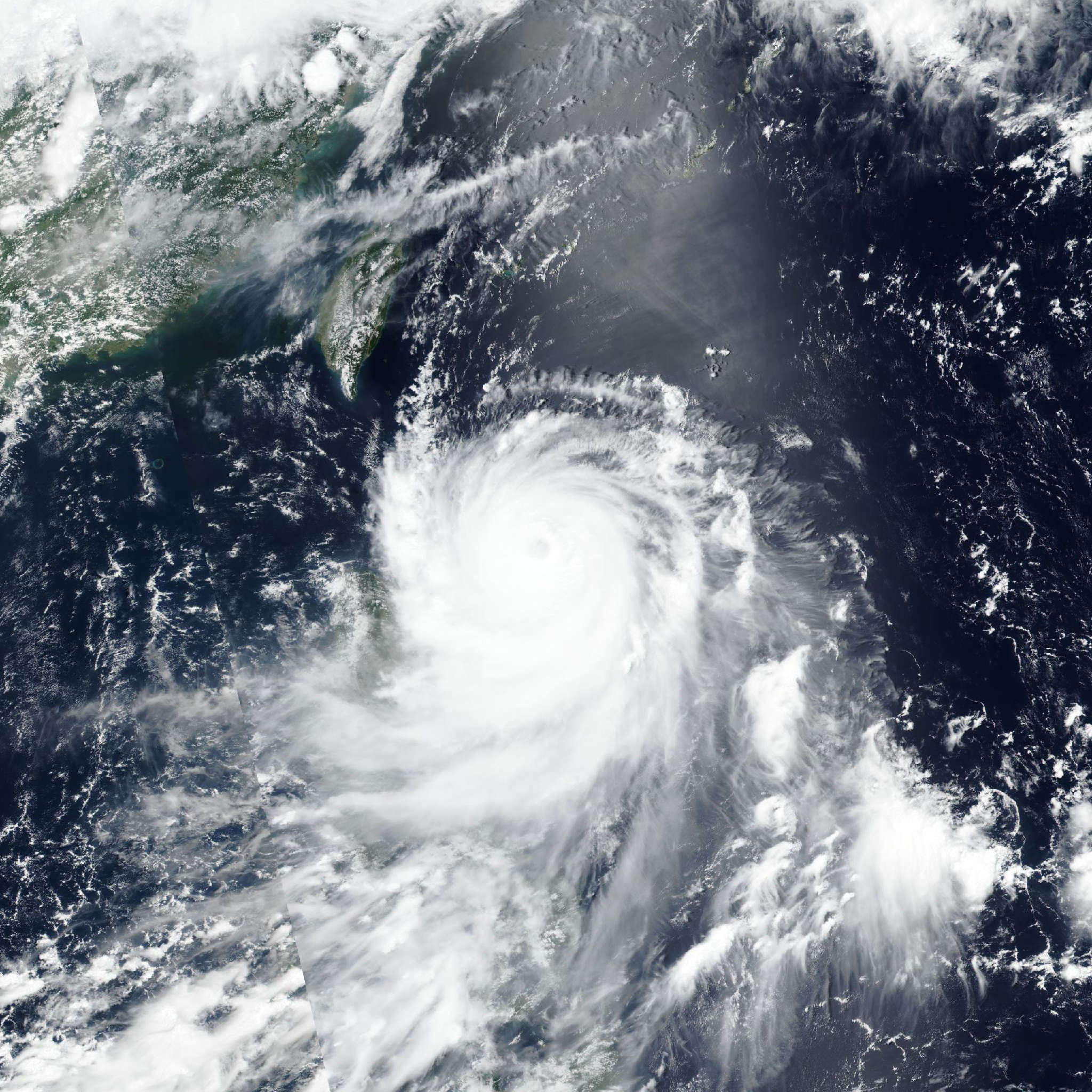
Live tracking map, satellite, radar, and forecasts of Tropical Storm Mekkhala 2026 (台風7号) in the Philippine Sea. Current wind speed 85km/h. Max 205km/h.
Mekkhala (Philippine name Francisco) is located 524 km north of Yap, and has tracked west-northwestward at 15 km/h (8 knots) over the past 6 hours. Maximum significant wave height is 6.4 meters (21 feet).
Mekkhala is forecast to track west-northwestward along the southern edge of a subtropical ridge centered to the north of the system. Then in 60 hours to 3 days, Mekkhala is forecast to begin recurving to the north as it nears a weakness in the subtropical ridge, assuming a northward heading after 4 days.
Some slowing of the storm motion is also expected during this turn due to weakening steering currents and the lack of a deep longwave trough nearby to pick up the system.
In terms of intensity, Mekkhala is forecast to continue intensifying as organization improves, though likely not rapidly during the first 24 hours due to the still tilted and asymmetric nature of the vortex.
During the 24 to 60 hour period, rapid intensification is forecast to occur as the vortex becomes vertically stacked within a favorable environment.
Peak intensity is forecast to occur in 60 hours to 3 days, followed by steady weakening after 3 days as shear sharply increases on the southern flank of a strong upper-level ridge north of the storm, centered over China. Additionally, oceanic upwelling may contribute to the weakening trend after 3 days due to the slowing storm motion.
Dynamical models continue to show a large range of possible intensity evolutions after the onset of wind shear beyond 3 days, contributing to lower than average confidence in the intensity forecast during this latter period.
Track model guidance is in good agreement initially but spreads dramatically after 3 days, with AI-based models and the GFS making up the western side of the guidance envelope, and the UKMET and ECMWF models making up the eastern side.
The largest area of disagreement lies with when Mekkhala will begin its recurvature. The official JTWC forecast is laid with high confidence out over the next 3 days, in line with the official JTWC consensus.
The forecast in 3 to 5 days is laid with medium confidence, splitting the difference between the groupings of physics-based and AI-based models.
The intensity model guidance is strongly split after 60 hours, with statistical models depicting much lower intensities than the high-resolution dynamical models like HAFS and COAMPS-TC.
The official JTWC intensity forecast is assessed with medium confidence over the next 3 days and low confidence thereafter, placed above the consensus and more in line with the dynamical models out over the next 3 days. Thereafter, the intensity is forecast to weaken just above the multi-model consensus.