Tropical Cyclone Grant 2026
Last Modified:
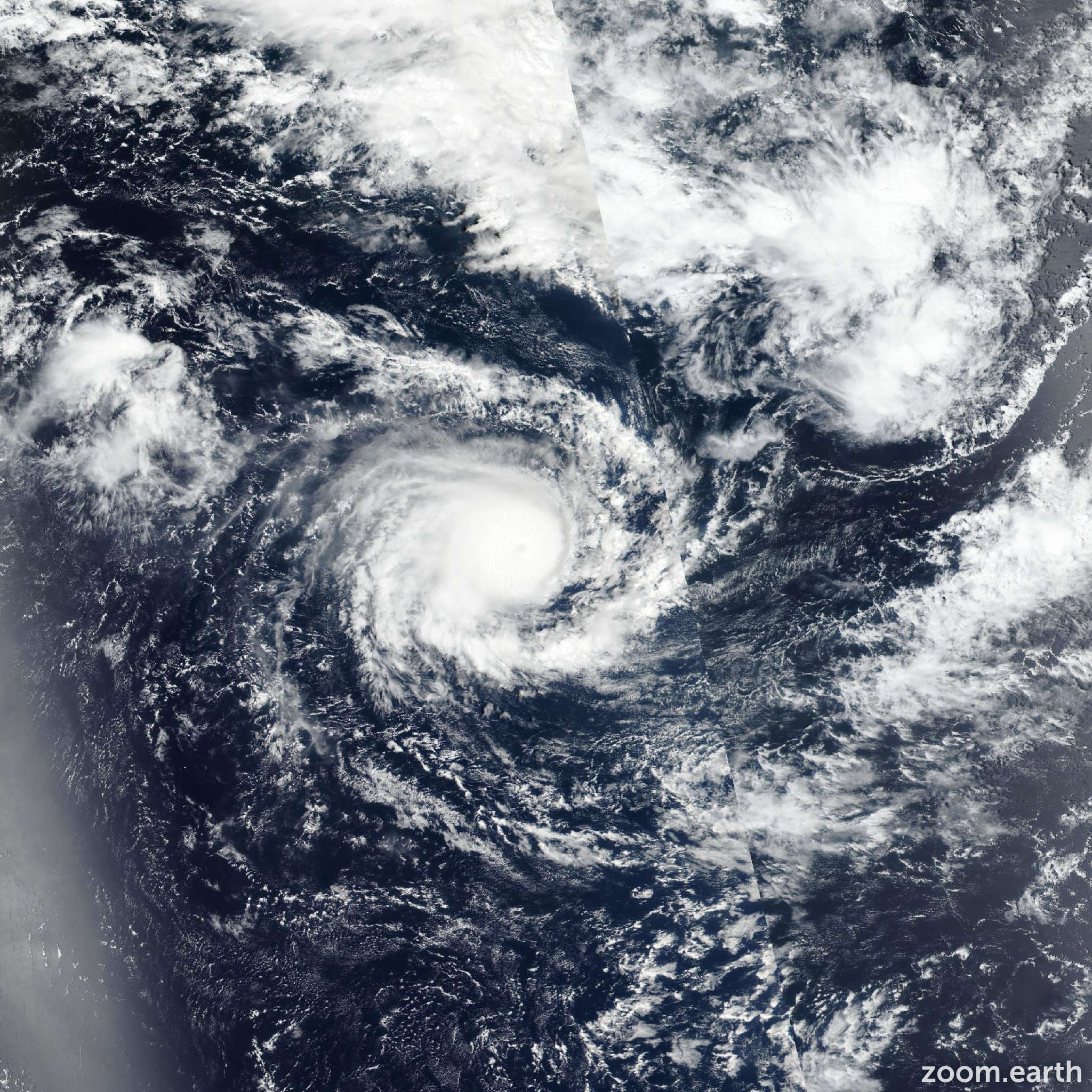
Live tracking map, satellite, radar, and forecasts of Tropical Cyclone Grant 2026 in the southwest Indian Ocean. Current wind speed 140km/h. Max 165km/h.
Grant is located 1482 km east-southeast of Diego Garcia, and has tracked west-southwestward at 19 km/h (10 knots) over the past 6 hours. Maximum significant wave height is 7.9 meters (26 feet).
Grant will move west-southwestward to westward over the next 3 days under the continued steering influence of subtropical ridging to the south. Thereafter, a second ridge building to the southwest of the system will take over as the primary steering mechanism, deflecting Grant a bit equatorward during the extended forecast period.
Favorably low wind shear, sufficiently warm sea surface temperatures and a near-term increase in poleward outflow enhanced by an upper-level trough passing the south are expected to support steady intensification for the next 24 hours. Thereafter, upper-level outflow will be restricted as the trough to the south translates eastward and the compact system will contend with the high likelihood of slow but steady entrainment of drier air wrapping around and into the system from the south and west, resulting in a slow weakening trend.
Model guidance is in very good agreement over the next 3 days but diverges slightly in orientation during the extended period due to differing depictions of the shift to a new steering ridge to the southwest of the system, with the bracketing GFS and ECMWF deterministic model solutions separated by about 556 km at 5 days.
The current JTWC track forecast is consistent with the previous forecast and multi-model consensus. Intensity forecast guidance shows significant spread in the near-term, with HAFS-A depicting rapid intensification to a peak of 215 km/h (115 knots) in 24 hours on the high end and COAMPS-TC and GFS indicating a steady state or modest intensification to about 150 km/h (80 knots) on the low end.
Environmental conditions are about the same as they have been over the past 12 hours, aside from a slightly improved poleward outflow pattern, so the current forecast anticipates a continuation of the recent slow but steady trend. However, the compact system is sensitive to shifts in environmental factors and a more rapid intensification rate cannot be ruled out.