Measure Distance

Measure Area

Click on the map to add points. Double‑click to finish.

Tap on the map to add points.

Tropical Storm Fytia 2026

Last Modified:

Tropical Storm Fytia

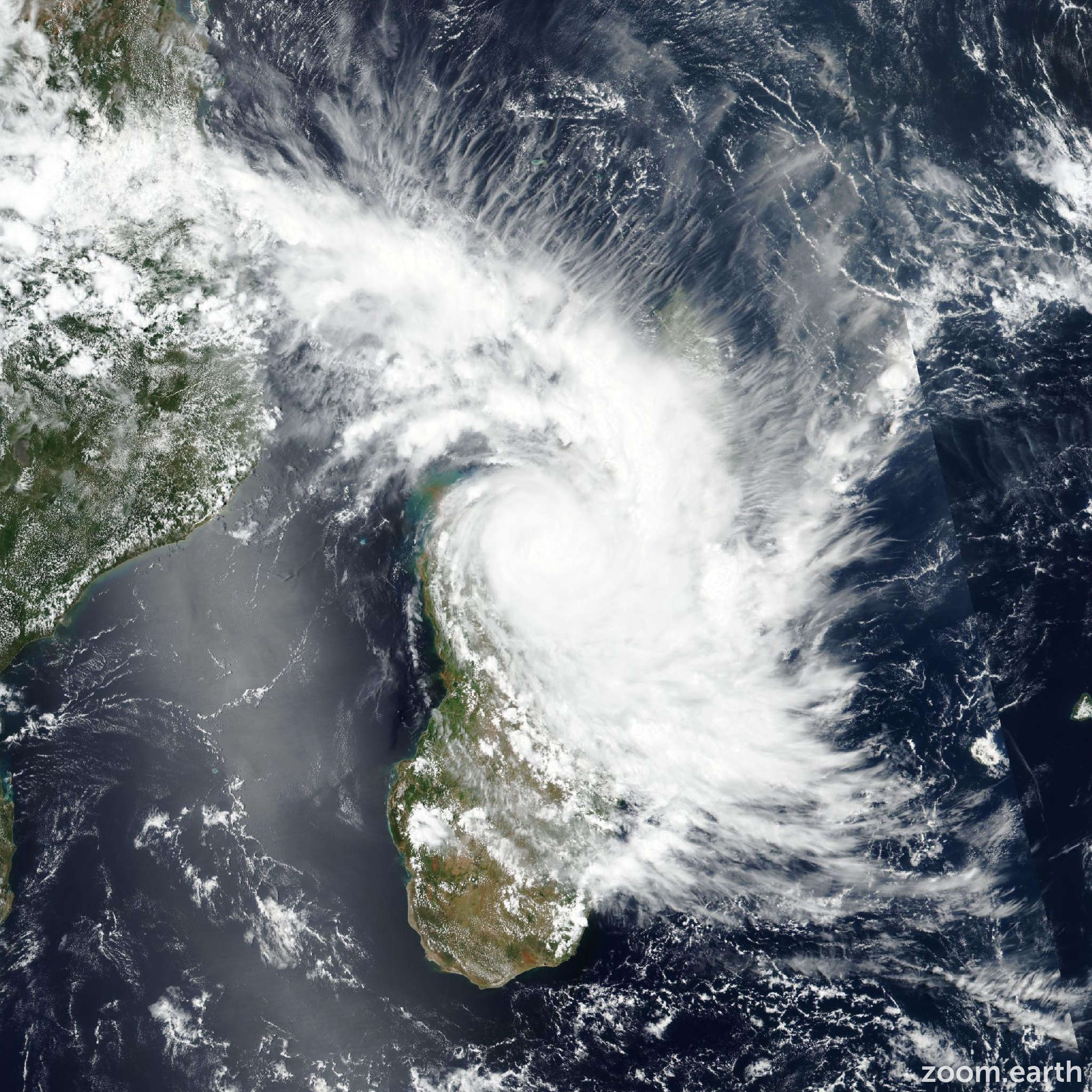
Live tracking map, satellite, radar, and forecasts of Tropical Storm Fytia 2026 over Madagascar. Current wind speed 95km/h. Max 185km/h.

Fytia is located 432 km northwest of Antananarivo, Madagascar, and has tracked east-southeastward at 19 km/h (10 knots) over the past 6 hours. Maximum significant wave height is 7 meters (23 feet).

Fytia will continue tracking southeastward under the influence of a near-equatorial ridge to the north and is expected to soon make landfall over the western portion of Madagascar.

While it will retain some of its structure while tracking inland, a quicker weakening trend will initiate as higher topography chips away at the core. This will bring the intensity of the storm down to 95 km/h (50 knots) at 12 hours and further to 65 km/h (35 knots) at 24 hours.

Fytia will then re-emerge as a weakened circulation along the eastern coast of Madagascar and venture out into the South Indian Ocean. The re-emergence will coincide with the start of a handoff in steering mechanism between the near-equatorial ridge to the north and a subtropical ridge over the central Indian Ocean.

Warm sea surface temperatures (29°C to 30°C) will facilitate a strengthening trend along with good outflow, but this short lived trend will be hindered by increasing shear and dry air entrainment.

The forecast track puts the circulation on a head on course towards the subtropical jet resulting in a completed subtropical transition in 5 days.

Cross track spread amongst model guidance is under 93 km for the majority of the forecast period, excluding interpolations of NAVGEM.

The JTWC forecast track is placed close to the multi model consensus but favors timing excluding NAVGEM influence and is assessed with high confidence.

Intensity guidance spread is close to 185 km/h (100 knots), with models struggling to resolve topographic interaction and the associated rate of weakening.

The JTWC forecast intensity is placed slightly below the multi model consensus for the first 24 hours and then reflects values in line with the consensus for the remainder of the forecast period.

The forecast intensity is placed with medium confidence based on deterministic and ensemble models agreeing on weakening and re-strengthening trends, but considering the uncertainty associated with post-landfall intensification initial conditions.