Measure Distance

Measure Area

Click on the map to add points. Double‑click to finish.

Tap on the map to add points.

Tropical Storm Douglas 2026

Last Modified:
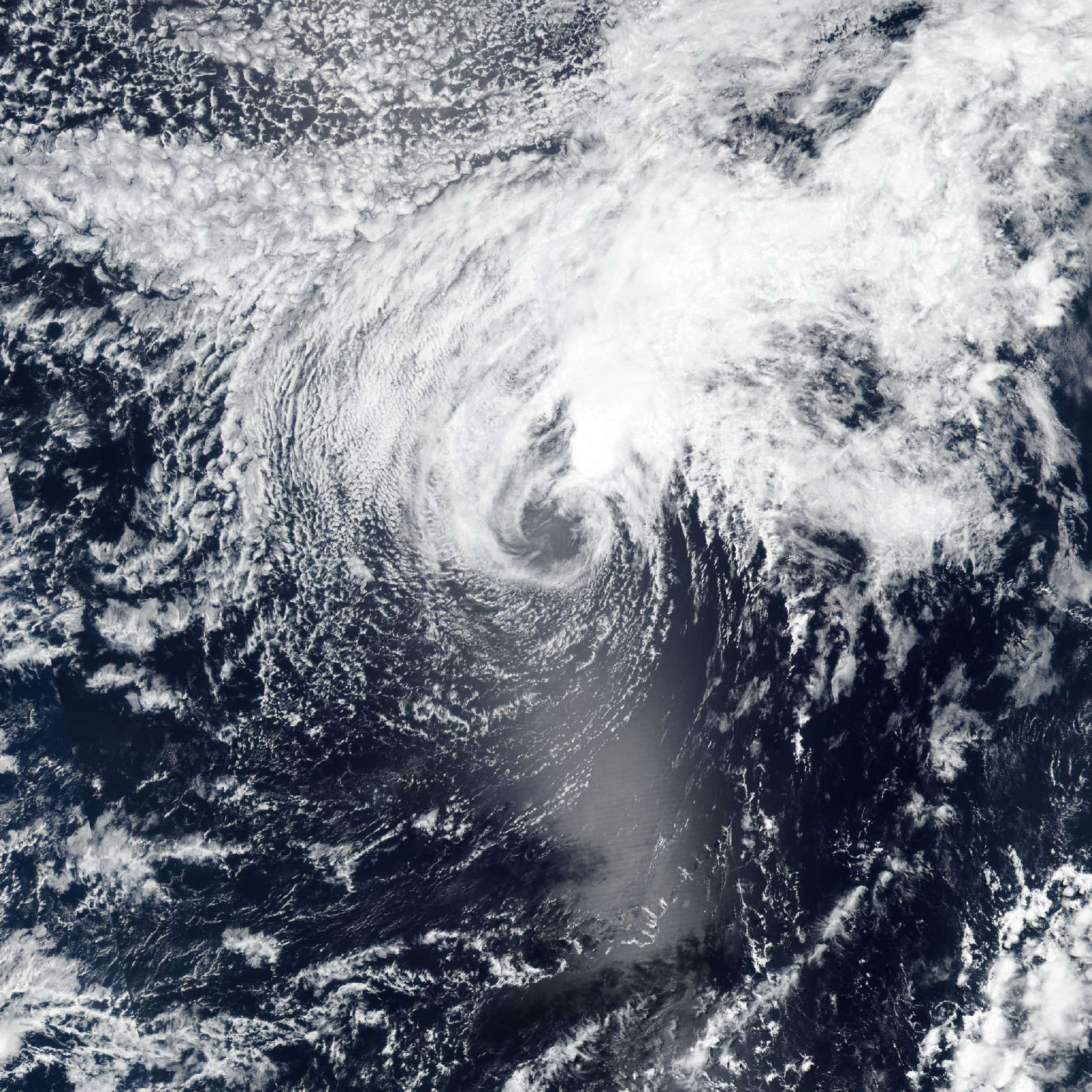
Tropical Storm Douglas

Live tracking map, satellite, radar, and forecasts of Tropical Storm Douglas 2026 in the eastern Pacific Ocean. Current wind speed 40mph.

There has been little change in the organization of Douglas during the past several hours as the cyclone continues to produce convection in a ragged band to the northwest and north of the center. The various subjective and objective satellite intensity estimates remain in the 35–40 knots range, and a partial ASCAT pass in the southeastern quadrant showed winds of at least 35 mph (30 knots). Based on these data, the initial intensity is held at 40 mph (35 knots).

The initial motion is now north-northwestward or 345/6 knots. This general motion should continue for the next 12 hours or so, followed by a turn to the northwest as the weakening cyclone is steered more by the low-level flow. The track guidance is in general agreement with this scenario, and indeed much of it lies to the left of the new forecast track. However, the Google DeepMind Ensemble mean shows less of a turn than the other models and consequently is on the right side of the guidance envelope by 48–72 hours. The new forecast track is a little to the left of the previous track and lies near the HCCA corrected consensus model.

Douglas is now passing over the 26°C isotherm and is experiencing 10–15 knots of southwesterly vertical shear. The shear is expected to increase while the cyclone moves over colder water, and the cyclone is also likely to entrain dry air. Based on these factors, Douglas should weaken during the forecast period. The current expectation is that the cyclone will stop producing convection and become a remnant low tomorrow by the 24 hours forecast point, with the remnant low persisting for several days as it continues northwestward.