Measure Distance

Measure Area

Click on the map to add points. Double‑click to finish.

Tap on the map to add points.

Tropical Storm Bavi 2026

Last Modified:

Tropical Storm Bavi

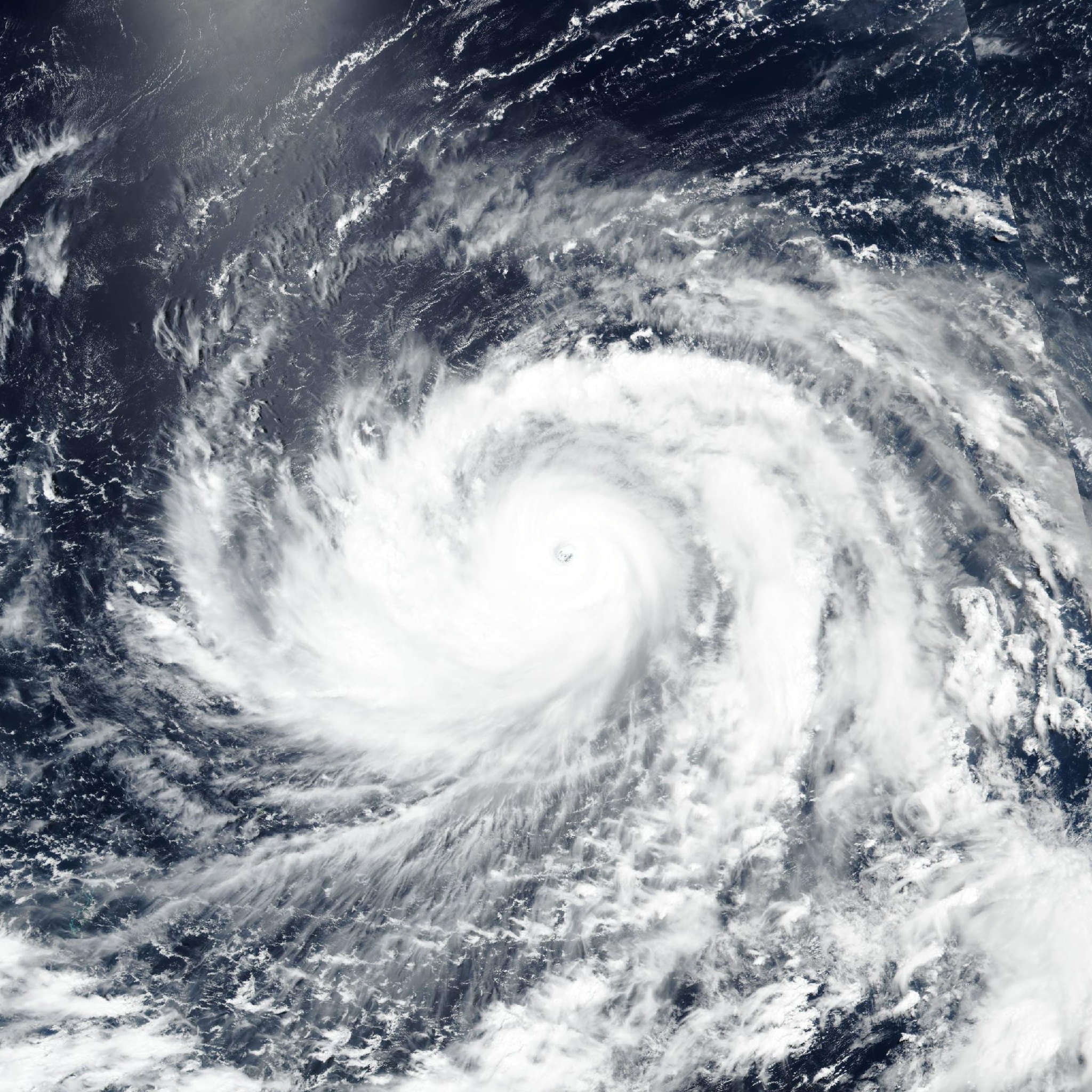
Live tracking map, satellite, radar, and forecasts of Tropical Storm Bavi 2026 (台風9号) in the western Pacific Ocean. Current wind speed 100km/h. Max 250km/h.

Bavi is located 1426 km east of Andersen Air Force Base, and has tracked west-northwestward at 20 km/h (11 knots) over the past 6 hours. Maximum significant wave height is 7.9 meters (26 feet).

The system is expected to assume a westward trajectory over the next 2 days as a subtropical ridge centered near Kyushu builds in from the west and takes over as the primary steering mechanism.

The track speed is expected to slow in 24 hours to 3 days under this steering influence as a longwave trough propagates eastward to the north, temporarily weakening the steering gradient.

After 60 hours, Bavi returns to a west-northwestward track as it approaches the Northern Mariana Islands, with a closest point of approach to Saipan around 05/23:00 UTC.

Intensification over the next 12 hours is expected to remain steady as the system consolidates and moves into a lower shear environment. After 12 hours, environmental conditions favor an extended period of rapid intensification (RI) over the next 60 hours.

HAFS-A continues to show an eyewall replacement cycle (eyewall replacement cycle) starting in 48 to 60 hours, continuing through passage trough the Northern Marianas. As a result, the intensity is forecast to level off at a peak of 250 km/h (135 knots) over the next 3 days through the remainder of the forecast period.

With the exception of the UKMET ensemble mean as a southern outlier and EC-AIFS as the northern outlier, model guidance has come into closer agreement with the latest model run, showing a cross-track spread of 93 km at 3 days.

Overall, the guidance agrees on the west-northwestward track without much further spread through the end of the forecast period. The JTWC track forecast is placed near a modified multi-model consensus that accounts for the outliers with high confidence throughout the forecast period.

Model intensity guidance strongly favors the rapid intensification scenario with all model solutions depicting varying degrees of RI with the exception of Decay-SHIPS.

The JTWC intensity forecast is placed along the mean of the remaining model guidance over the next 2 days, then on the higher end of guidance later, with medium confidence throughout.