Measure Distance

Measure Area

Click on the map to add points. Double‑click to finish.

Tap on the map to add points.

Tropical Storm Arthur 2026

Last Modified:
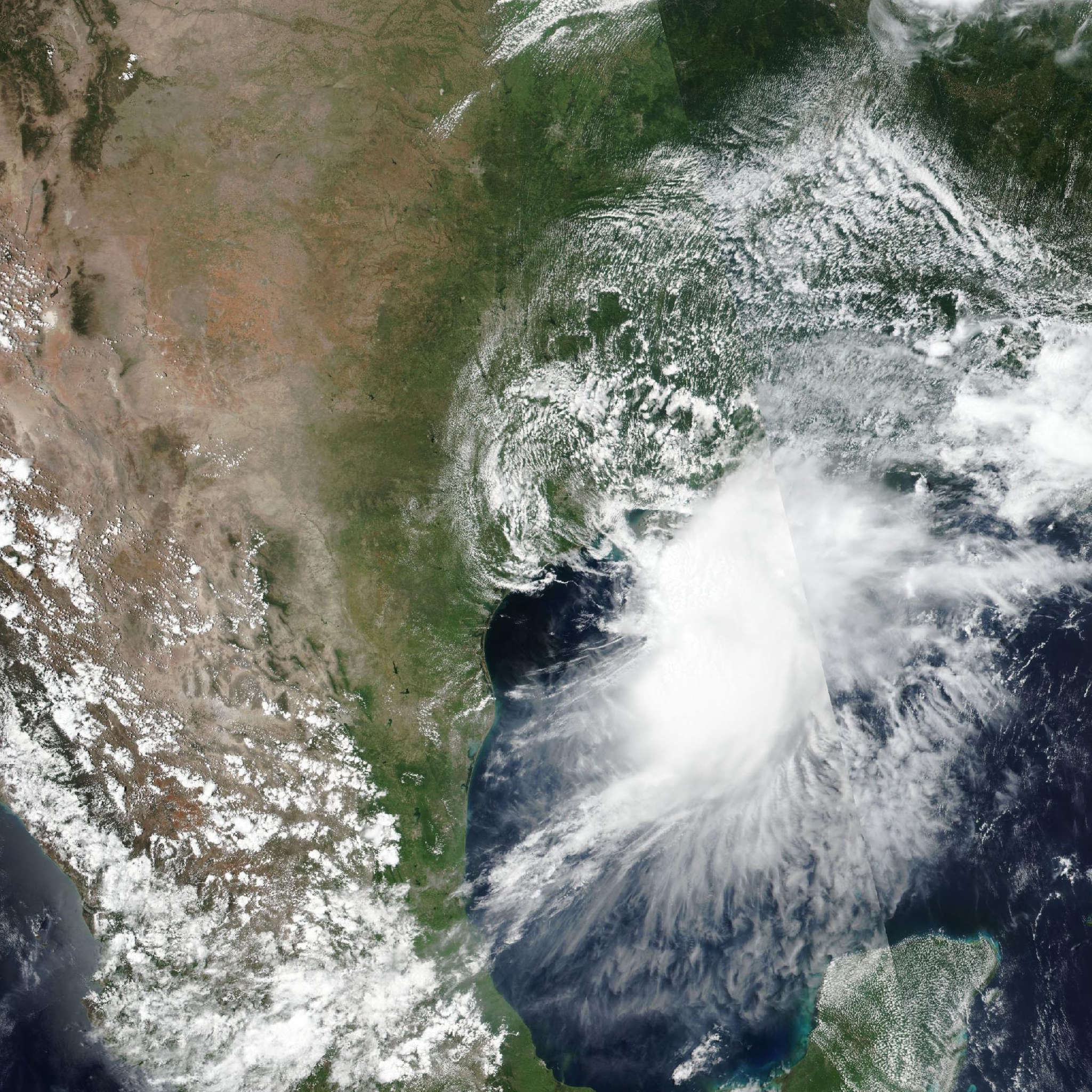
Tropical Storm Arthur

Live tracking map, satellite, radar, and forecasts of Tropical Storm Arthur 2026 near Galveston, Texas, United States. Current wind speed 45mph.

Potentially life-threatening flash flooding and urban flooding are likely through Friday across southern Louisiana, southern Mississippi, southern Alabama, southwestern Georgia, and the Florida Panhandle. Scattered minor river flooding is expected, with the potential for isolated moderate to major river flooding. Ongoing heavy rainfall could prolong the flood threat through the weekend.

Tropical-storm-force winds, especially in gusts, are expected along the Upper Texas and Louisiana coasts during the next few hours where a Tropical Storm Warning is in effect.

Minor to moderate coastal flooding is expected along portions of the Upper Texas and Louisiana coastlines today (17 June).

The center of Arthur appears to have moved inland over Matagorda County, Texas, early this afternoon (17 June) based on visible satellite images and surface observations. However, the circulation center has become more diffuse and less defined over the past couple hours, making it difficult to track with much confidence. A large area of deep convection persists over the northwestern Gulf, but strong westerly shear has displaced it even farther from the center. Marine observations and data from the NOAA Hurricane Hunters show tropical-storm-force winds are still ongoing within this convection well to the east and southeast of the center. Based on a blend of the aircraft data and available surface observations, the initial intensity is held at 45 mph (40 knots).

The low-level mean center has deviated more northward than expected today, and the long-term motion estimate is north-northeastward at about 5 mph (6 knots). Most models suggest the circulation center will dissipate within the next 6–12 hours, but a continued motion toward the north-northeast is forecast for Arthur or its low-level remnants through tonight. This updated track forecast has shifted left (farther inland) due to the center relocation this afternoon. However, this is of little consequence as the greatest impacts from Arthur are still being felt well to the east of its center.

Now that the center of Arthur is inland, weakening is expected while it contends with strong westerly shear and some drier mid-level air infiltrating from the west. Model-simulated satellite imagery from the GFS and ECMWF suggest the associated convection should mostly collapse tonight. The 12 hours forecast point shows remnant low status, but it could just as likely dissipate before that time. The ECMWF and Canadian models still suggest a potential for low pressure development over the western Atlantic late this week or this weekend as remnant vorticity from Arthur emerges off the Southeast U.S. coast. However, it is unclear how tropical in nature this system would be if it were to develop, so we will continue to monitor model trends.

Heavy rainfall and life-threatening flash flooding remain the primary hazard, and it is stressed that this threat extends well away from the center and will persist even after Arthur dissipates. There is also an increased tornado threat for portions of the southeastern U.S. through Thursday.