Measure Distance

Measure Area

Click on the map to add points. Double‑click to finish.

Tap on the map to add points.

Tropical Cyclone 18P (Tropical Low 20U) 2026

Last Modified:
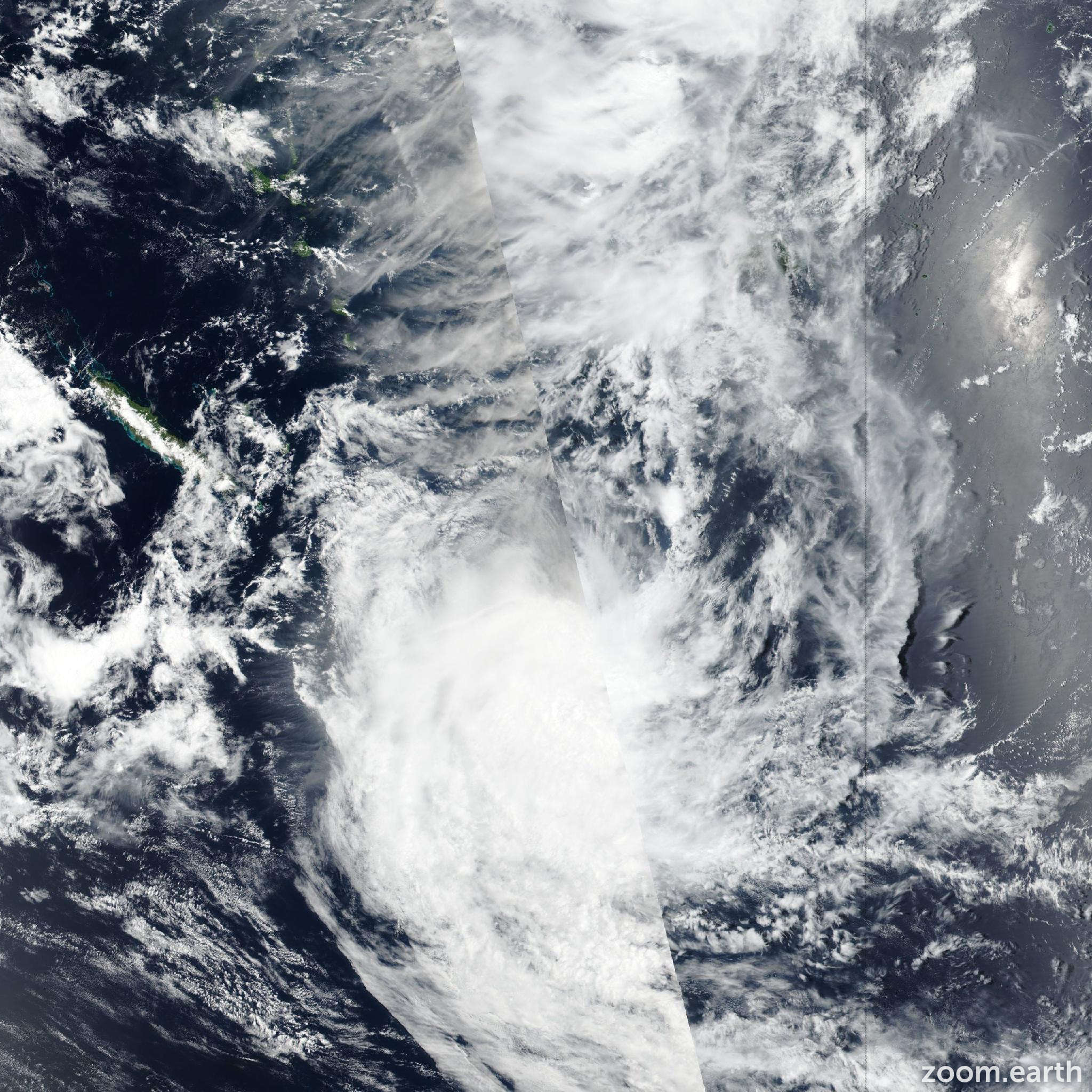
Cyclone 18P (20U)

Live tracking map, satellite, radar, and forecasts of Tropical Cyclone 18P 2026 south of Fiji in the South Pacific Ocean. Current wind speed 100km/h.

18P (Tropical Low 20U) is located 606 km southwest of Suva, Fiji, and has tracked southward at 43 km/h (23 knots) over the past 6 hours. Maximum significant wave height is 6.1 meters (20 feet).

18P is forecast to continue generally southward for the next 12 hours before gently curving to the southwest as it rounds the axis of the steering subtropical ridge.

18P is forecast to track southwestward over the next 12 hours through the end of the forecast at 36 hours as it shallows out and comes under the steering influence of the low-level easterly flow along the north side of a ridge positioned in the tasman sea.

Regarding intensity, 18P is forecasted to currently be at its peak intensity of 100 km/h (55 knots), and is expected to begin a terminal weakening trend imminently.

As 18P tracks farther south, it will encounter increasingly unfavorable conditions: 65–75 km/h (35–40 knots) of wind shear, marginal (26°C) sea surface temperatures, dry air entrainment, and the loss of the robust outflow support from the upper level trough, all in 24 hours. Consequently, 18P will quickly weaken over the next 12 hours onward, and begin subtropical transition (STT) while it moves poleward.

Ultimately, dissipation is forecast to occur before 18P completes STT, in 36 hours. Deterministic track model guidance is in good agreement in a south to southwestward track over the next 36 hours, with only minor discrepancies in cross-track and along-track spread. As a result, the JTWC track forecast is placed with overall high confidence.

Reliable intensity guidance is in good agreement that 18P has peaked and will begin terminally weakening imminently.

All intensity guidance shows dissipation in 36 hours at the latest, supporting the JTWC intensity forecast with high confidence.